
El concepto de que arroz congelado adelgaza se ha convertido en uno de esos “trucos” virales que aparecen una y otra vez en redes sociales. Tal vez lo has visto en TikTok, en reels de Instagram o en blogs que prometen cambios simples para perder peso sin esfuerzo. La idea parece sencilla: cocinar el arroz, enfriarlo o congelarlo, recalentarlo después… y supuestamente comer menos calorías. Pero, ¿es realmente así?
En los últimos años, internet ha amplificado muchos consejos rápidos relacionados con la alimentación. Algunos tienen base científica; otros, en cambio, nacen de interpretaciones incompletas. Por eso, entender qué hay detrás del arroz frío calorías y del famoso almidón resistente arroz es clave antes de sacar conclusiones. Además, esta tendencia no es aislada: existen otros alimentos que la gente congela por costumbre pensando que cambian sus propiedades.
Ahora bien, ¿qué significa realmente enfriar el arroz? ¿Enfriar arroz engorda menos? ¿El arroz recalentado es mejor que el recién hecho? A lo largo de este artículo vamos a analizar de forma clara y sin exageraciones qué ocurre cuando se enfría el arroz, por qué enfrían el arroz en ciertos contextos y si existe algún efecto real sobre las calorías o el peso corporal.
Porque sí, el arroz es un alimento básico en millones de hogares. Y precisamente por eso, cualquier afirmación sobre que el arroz congelado adelgaza merece una explicación completa, sencilla y basada en contexto. Aquí vamos a desmenuzar el mito, entender el proceso y separar lo viral de lo real.
Introducción al mito del arroz congelado adelgaza
La tendencia del arroz congelado para bajar de peso
The idea that arroz congelado adelgaza has gained traction because it sounds simple, practical, and almost too good to be true. After all, rice is a staple food in many American households. So naturally, when someone claims that just cooling or freezing it can reduce calories, people pay attention.
At first glance, the concept feels logical. You cook the rice, let it cool, maybe freeze it, then reheat it later. Supposedly, this process changes the starch and makes the rice “healthier” or “lighter.” As a result, many believe that arroz frío calorías are lower than freshly cooked rice. However, before jumping to conclusions, we need to unpack what actually happens.
Interestingly, this type of food myth spreads fast because it offers an easy shortcut. Instead of changing portion sizes or overall diet quality, the promise focuses on a small tweak. And honestly, people love hacks. That’s why phrases like enfriar arroz engorda menos start trending almost overnight.
Still, context matters. Weight loss does not depend on one single ingredient. Instead, it depends on total calorie intake, lifestyle, activity level, and long-term habits. So even if cooling rice changes something at a molecular level, that doesn’t automatically mean dramatic fat loss.
Moreover, similar ideas circulate around other everyday foods. For example, there are otras prácticas similares con alimentos cotidianos where freezing is believed to “boost” benefits. Therefore, it’s important to separate tradition, internet trends, and actual science.
Por qué cada cierto tiempo reaparece este tipo de “truco” nutricional
Food trends cycle constantly. Every few years, a new version of the same idea appears with slightly different wording. One year it’s “low-carb everything.” Another year it’s “superfood powders.” Then suddenly, arroz congelado adelgaza becomes the new headline.
So why does this happen? First, because rice is a carbohydrate, and carbs often get blamed for weight gain. As a result, any suggestion that changes how carbs behave feels exciting. Second, because scientific terms like almidón resistente arroz sound technical and convincing. When people hear “resistant starch,” they assume something powerful is happening.
However, the reality is usually more nuanced. Yes, cooling rice can slightly alter its starch structure. Yet that does not magically erase calories. In fact, the difference in arroz frío calorías compared to hot rice is much smaller than social media implies.
Additionally, quick-fix culture plays a huge role. People want simple adjustments that don’t require major lifestyle changes. And honestly, freezing rice feels effortless. Cook once, store it, reheat it, done. But weight management rarely works that way.
Therefore, instead of asking only “does arroz congelado adelgaza?”, a better question might be: how significant is the effect, and does it matter in a balanced diet? That’s exactly what we’ll explore next, step by step, without exaggeration and without dismissing the science behind starch changes.
¿Qué es exactamente el arroz congelado?
Enfriar el arroz después de cocinarlo
To understand whether arroz congelado adelgaza, we first need to define what people actually mean. In most cases, the process starts in a very ordinary way: you cook rice as usual. Then, instead of eating it immediately, you let it cool down.
This cooling step is key. As the rice drops in temperature, its starch begins to change structure. Specifically, part of the digestible starch transforms into what is known as almidón resistente arroz. Now, that sounds technical, but in simple terms, resistant starch is a type of carbohydrate that the body digests more slowly.
However, cooling rice does not remove its carbohydrates. It does not eliminate calories. Rather, it slightly alters how the body processes part of the starch. Therefore, when people search for arroz frío calorías, they often expect a dramatic reduction. In reality, the change is modest.
Still, because the process feels intentional and controlled, many assume it must have a strong metabolic effect. Yet, just letting rice cool on the counter or in the fridge is a completely normal kitchen practice.
Guardar el arroz en frío o congelarlo para conservarlo
The next step often involves refrigeration or freezing. Many households cook rice in large batches and store it for later use. In fact, meal prepping has made this habit even more common.
Freezing rice does not inherently change it into a “diet food.” Instead, freezing simply preserves it. The idea behind arroz congelado adelgaza comes from the belief that once the rice has cooled and formed more resistant starch, it keeps that structure even after reheating.
And yes, some of that resistant starch remains. However, that does not mean enfriar arroz engorda menos in a dramatic way. The calorie difference is small compared to portion size or added ingredients like oils and sauces.
So while freezing rice is practical and safe when done correctly, it should not be confused with a weight-loss strategy on its own.
Recalentar arroz: práctica doméstica normal
Reheating rice is something millions of people do every day. Whether it’s leftovers from dinner or part of a weekly meal prep plan, reheated rice is simply convenient.
Interestingly, this is where another claim appears: arroz recalentado es mejor. Supporters argue that reheating preserves the resistant starch formed during cooling. While partially true, the effect remains moderate. It does not turn rice into a low-calorie food.
Moreover, food safety matters here. Rice must be cooled quickly and stored properly to avoid bacterial growth. Therefore, the health discussion should always include safe handling practices, not just calorie claims.
In short, arroz congelado adelgaza is based on a real biological process involving starch changes. Yet the kitchen practice itself—cooking, cooling, freezing, reheating—is completely normal. The difference lies in expectations. And that’s exactly where the viral confusion begins.
¿Por qué se hizo viral el arroz congelado adelgaza?
Videos de nutrición y redes sociales
The claim that arroz congelado adelgaza did not become popular through scientific journals. Instead, it exploded on TikTok, Instagram, and YouTube. Short videos simplified the concept into a catchy message: “Cook it, cool it, reheat it — fewer calories.”
Because social media favors quick, visual explanations, complex topics like almidón resistente arroz were reduced to sound bites. As a result, viewers heard that starch “changes” and immediately assumed that calories disappear. However, nuance rarely goes viral.
Moreover, creators often frame these tips as insider knowledge. Phrases like “nutritionists don’t want you to know this” spark curiosity. Therefore, people click, share, and try it themselves. And just like that, arroz frío calorías becomes a trending search.
Este tipo de tendencia recuerda a otras prácticas como tomar semillas de chía en la noche para controlar el apetito.
El “truco” del arroz frío calorías
Every viral trend needs a hook. In this case, the hook was simple: fewer calories without eating less food. Naturally, that idea spreads fast. After all, who wouldn’t want to enjoy rice and still lose weight?
However, the phrase enfriar arroz engorda menos sounds more powerful than it actually is. While cooling rice does slightly increase resistant starch, the overall calorie difference per serving is relatively small. In fact, portion size and toppings usually have a bigger impact.
Still, because the concept feels scientific, many assume it must be significant. Words like “resistant starch” and “metabolic change” create authority. Yet without context, those terms can be misleading.
Curiosidad colectiva y dieta internet
Internet diet culture thrives on experimentation. People constantly test hacks, compare results, and post before-and-after photos. Consequently, trends like arroz congelado adelgaza fit perfectly into this environment.
At the same time, curiosity plays a major role. When something challenges what we think we know about carbs, we pay attention. Rice has often been labeled as “fattening,” so any method that promises to reduce its impact feels revolutionary.
Additionally, this isn’t the first time food habits from other cultures or routines have gone viral. For example, many people explore hábitos alimentarios populares en internet hoping to unlock similar benefits. Therefore, freezing rice becomes part of a larger pattern: searching for simple, global food solutions.
In the end, arroz congelado adelgaza went viral because it blends science, simplicity, and hope. However, popularity does not automatically equal effectiveness. So next, we’ll look at what people actually believe happens when rice is cooled — and whether those beliefs match reality.
¿Qué cree la gente que pasa al enfriar el arroz?
¿Enfriar arroz engorda menos?
One of the most repeated claims online is that enfriar arroz engorda menos. In other words, people believe that once rice cools down, it somehow becomes less fattening. That idea sounds appealing, especially for anyone trying to cut calories without cutting carbs.
However, the logic often gets oversimplified. Many assume that if digestion slows down, then fewer calories are absorbed. While it is true that cooling rice increases almidón resistente arroz, this does not automatically mean dramatic calorie reduction. Instead, the change affects how part of the starch behaves in the gut.
So yes, something happens. But no, it’s not magic. The phrase arroz congelado adelgaza suggests a strong slimming effect, yet the biological shift is relatively small compared to total daily intake.
La idea de que el arroz frío tiene menos calorías
Another common belief is that arroz frío calorías are significantly lower than hot rice. Some videos even claim that freezing rice “removes” calories. In reality, calories do not disappear.
What changes is the digestibility of a portion of the starch. Resistant starch passes through the small intestine without being fully digested. Therefore, it provides slightly fewer usable calories. Still, the difference per serving is modest.
For example, if someone eats a large bowl of rice with added oil or sauce, the overall calorie intake will depend far more on portion size and extras than on whether the rice was cooled first. Consequently, focusing only on temperature misses the bigger picture.
Percepción de digestión distinta y alimento más ligero
Many people also report that cooled or reheated rice feels “lighter.” This perception may be linked to slower digestion. Because resistant starch behaves more like fiber, it can influence gut fermentation and fullness signals.
Even so, feeling lighter does not necessarily equal fat loss. Weight loss depends on consistent calorie balance over time. Therefore, believing that arroz congelado adelgaza on its own can create false expectations.
Additionally, when people change one habit—like cooling rice—they often adjust other behaviors too. They may control portions more carefully or eat more balanced meals. As a result, improvements might come from the overall shift, not just the rice itself.
In short, the popular beliefs around enfriar arroz engorda menos mix a bit of science with a lot of assumption. So next, we’ll explore what actually happens at the molecular level when rice cools—and how significant that effect truly is.
Qué ocurre realmente al enfriarse el arroz
Qué es el almidón resistente en el arroz
Now we reach the most important part of the discussion. When people say arroz congelado adelgaza, they are usually referring to one concept: almidón resistente arroz.
So what is resistant starch? Simply put, it is a type of starch that resists digestion in the small intestine. Instead of being fully broken down into glucose, part of it travels to the large intestine, where it behaves more like fiber.
When rice is freshly cooked, most of its starch is easily digestible. However, once it cools, a natural process called retrogradation occurs. During this process, some starch molecules rearrange and become less digestible. As a result, a portion turns into resistant starch.
That sounds impressive. And yes, it is scientifically real. However, the increase is moderate, not extreme. Therefore, the idea that arroz frío calorías drop dramatically is exaggerated.
Cómo cambia el almidón al enfriarse
When rice cools down in the fridge or freezer, its internal structure tightens slightly. Because of this structural shift, digestive enzymes have a harder time breaking down certain starch molecules.
Consequently, a small percentage of the carbohydrates become less available for immediate energy use. That is why some people say enfriar arroz engorda menos. Technically, it may slightly reduce the effective calorie absorption.
However, the reduction is relatively small per serving. In practical terms, the difference might not even be noticeable unless portion sizes are large and consistent over time. So while the process supports the theory behind arroz congelado adelgaza, it does not turn rice into a low-carb food.
Arroz recalentado es mejor: qué hay de cierto
Another common question is whether arroz recalentado es mejor. Interestingly, once resistant starch forms during cooling, a portion of it remains even after reheating.
That means reheated rice can still contain slightly more resistant starch than freshly cooked rice eaten immediately. However, reheating does not increase it further. It simply preserves part of the change.
Therefore, arroz recalentado is not “better” in a dramatic sense. It is simply slightly different. And again, the impact on total daily calories is modest.
Por qué enfrían el arroz en algunos contextos
People cool rice for many reasons beyond weight loss. In meal prep culture, cooling and freezing help with convenience and portion control. In some traditional cuisines, chilled rice is part of the recipe itself.
Additionally, structured eating plans sometimes emphasize resistant starch for gut health rather than fat loss. So when asking por qué enfrían el arroz, the answer often relates to digestion, texture, or preparation efficiency—not necessarily slimming.
Moreover, discussions about resistant starch appear alongside otros alimentos que la gente congela por costumbre, where people believe freezing changes nutritional impact. Yet in most cases, the primary benefit is practicality.
No es un efecto milagro: contexto dentro de la dieta global
At this point, it’s important to zoom out. Even if arroz congelado adelgaza slightly alters starch digestion, weight loss depends on overall calorie balance.
For instance, eating cooled rice in large quantities with calorie-dense sauces will still lead to high intake. On the other hand, moderate portions within a balanced diet may support steady weight management.
Therefore, the key factor is not just whether the rice was cooled, but how it fits into your daily eating pattern. Resistant starch can contribute to gut health and fullness. Yet sustainable fat loss requires consistent habits, physical activity, and mindful portions.
In short, cooling rice does create real biochemical changes. However, those changes are subtle. So while the science behind almidón resistente arroz is valid, the promise that arroz congelado adelgaza on its own is overstated.
Arroz frío calorías: análisis realista
Comparación nutricional arroz recién hecho vs arroz frío
At this point, the big question remains: do arroz frío calorías really differ in a meaningful way from freshly cooked rice?
Nutritionally speaking, cooked white rice contains mostly carbohydrates, a small amount of protein, and almost no fat. When rice cools, its total carbohydrate content does not disappear. Instead, a small fraction converts into almidón resistente arroz.
To make this clearer, here’s a simplified comparison per 1 cup (approximate values):
| Type of Rice | Total Carbs | Resistant Starch | Approx. Calories |
|---|---|---|---|
| Freshly cooked rice | High | Low | ~200 kcal |
| Cooled/reheated rice | High | Slightly higher | Slightly lower usable calories |
Although the resistant starch increases after cooling, the calorie reduction is not dramatic. In fact, the difference is relatively small compared to adding butter, oil, or sugary sauces. Therefore, saying arroz congelado adelgaza without context can be misleading.
Impacto real en calorías y absorción
Because resistant starch is digested differently, it provides fewer available calories per gram than regular starch. However, we’re talking about a modest shift, not a drastic cut.
For example, if someone consumes 2,000 calories per day, the slight reduction from cooled rice alone is unlikely to create a significant calorie deficit. On the other hand, combining portion control, balanced macronutrients, and physical activity would make a much bigger difference.
This is why the phrase enfriar arroz engorda menos needs perspective. Technically, it might reduce effective calorie absorption slightly. Practically, though, it’s not a shortcut to fat loss.
Moreover, many people who try the arroz congelado adelgaza method also improve other habits at the same time. They may track portions more carefully or reduce processed foods. As a result, weight changes may come from overall dietary improvement, not just the rice temperature.
Lo que dicen los estudios sobre el almidón resistente arroz
Research supports the idea that resistant starch can improve gut health and may enhance satiety. Because it behaves somewhat like fiber, it can feed beneficial gut bacteria and support digestion.
However, studies do not show that simply freezing rice guarantees weight loss. Instead, they suggest that resistant starch can be one small factor within a balanced eating pattern.
So while arroz recalentado es mejor in terms of slightly higher resistant starch content, the improvement is incremental. It does not replace healthy lifestyle fundamentals.
In short, arroz frío calorías may be marginally lower in terms of available energy. Yet sustainable fat loss depends far more on consistency, portion size, and long-term behavior than on whether the rice was cooled overnight.
¿Cómo se suele consumir el arroz congelado?
Arroz recalentado en comidas diarias
In real life, arroz congelado adelgaza is rarely used as a “diet trick” alone. Instead, most people simply reheat rice as part of normal daily meals. Leftovers from dinner, quick lunches, or fast stir-fries often include reheated rice.
Because of meal convenience, many households cook rice in batches. Then, they store it in the fridge or freezer and reheat portions as needed. While some believe arroz recalentado es mejor for weight control, the main benefit is usually time-saving, not calorie reduction.
Additionally, the texture of cooled rice can change slightly. Some people prefer it for fried rice or rice bowls because it feels firmer and less sticky. Therefore, practical cooking reasons often explain the habit more than fat-loss goals.
Uso en meal prep y organización semanal
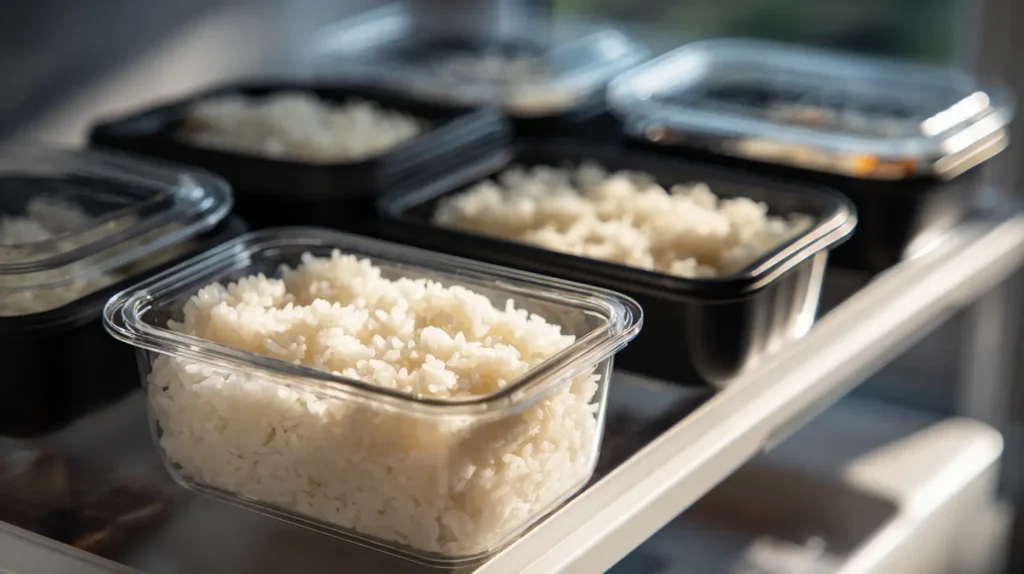
Meal prep culture has amplified the discussion around arroz frío calorías. Many fitness influencers promote batch cooking to stay on track. Since rice stores well, it becomes a staple in weekly meal plans.
However, the reason meal prep works is not because rice is frozen. Instead, it works because it supports portion control and consistency. When meals are pre-measured and balanced, it becomes easier to manage daily calorie intake.
So while arroz congelado adelgaza might sound like the hero, the real advantage comes from structure. Planning ahead reduces impulsive eating and helps maintain steady habits.
Interestingly, this pattern mirrors other viral food routines and hábitos alimentarios populares en internet, where the structure of eating matters more than a single ingredient tweak.
Seguridad alimentaria al recalentar arroz
Before focusing only on calorie myths, it’s essential to talk about safety. Cooked rice can develop bacteria if left at room temperature for too long. Therefore, it should be cooled quickly and stored properly in airtight containers.
When reheating, the rice should reach a safe internal temperature. Otherwise, foodborne illness becomes a real risk. So even if someone believes enfriar arroz engorda menos, safety must always come first.
Moreover, safe storage practices apply to many foods people freeze regularly. In fact, there are otras prácticas similares con alimentos cotidianos that also require correct handling to maintain quality and safety.
In the end, how rice is consumed matters just as much as how it is cooled. While the science behind resistant starch is real, daily habits, portion size, and food safety practices play a much bigger role than the temperature of the rice itself.
Conclusión sobre si el arroz congelado adelgaza
Resumen claro y sin exageraciones
After reviewing the science and the viral claims, we can finally answer the big question: does arroz congelado adelgaza?
Technically, cooling rice increases almidón resistente arroz, which slightly changes how the body digests part of its carbohydrates. Because resistant starch behaves more like fiber, it may reduce the amount of immediately available energy from a serving. However, the difference in arroz frío calorías is modest.
In other words, yes, something changes. But no, it’s not a miracle. The calorie reduction per serving is relatively small compared to total daily intake. Therefore, saying enfriar arroz engorda menos without context can create unrealistic expectations.
Además del arroz congelado, existen otras tendencias relacionadas con el momento del consumo, como tomar semillas de chía en la noche o preparar agua con chía antes de dormir. Estas prácticas se han vuelto populares por su supuesta influencia en el apetito y la digestión nocturna.
Moreover, many people who adopt this method also improve other habits at the same time. They may control portions, cook at home more often, or reduce processed foods. As a result, any weight change may come from overall lifestyle improvements rather than from the rice alone.
Qué realmente importa para adelgazar
Sustainable fat loss depends on consistent calorie balance, nutrient quality, physical activity, and sleep. While resistant starch can support gut health and fullness, it cannot replace those fundamentals.
So instead of focusing only on whether arroz recalentado es mejor, it’s smarter to zoom out. Ask yourself:
- Are portions reasonable?
- Is the diet balanced?
- Are highly processed extras minimized?
- Is there regular movement?
Because ultimately, rice—whether hot, cold, or frozen—is just one part of the bigger picture.
Therefore, the most accurate conclusion is this: arroz congelado adelgaza slightly in theory due to resistant starch changes, but in practice, the effect is small. What truly drives results is the overall dietary pattern.
If freezing rice helps you meal prep, stay consistent, and avoid overeating, then it can support your goals indirectly. However, it should never be seen as a standalone weight-loss hack.
Next, let’s answer the most common questions people ask about this trend so you can make an informed decision.
Preguntas frecuentes sobre arroz congelado adelgaza
¿El arroz congelado adelgaza de verdad?
The short answer is: not in a dramatic way. While arroz congelado adelgaza slightly increases almidón resistente arroz, the calorie reduction per serving is small. Therefore, it may contribute marginally to lower energy absorption, but it will not cause weight loss on its own. Sustainable fat loss depends on total calorie balance over time.
¿El arroz frío tiene menos calorías?
Technically, arroz frío calorías may be slightly lower in terms of usable energy because some starch becomes resistant starch after cooling. However, the total carbohydrate content remains almost the same. So although digestion changes a bit, the calorie difference is modest.
¿El almidón resistente del arroz ayuda a perder peso?
Resistant starch can support fullness and gut health. Because it behaves somewhat like fiber, it may help you feel satisfied longer. Still, its effect is supportive, not transformative. In other words, almidón resistente arroz can be part of a balanced diet, but it is not a magic solution for fat loss.
¿Es mejor el arroz recalentado que recién hecho?
When people say arroz recalentado es mejor, they usually mean it contains slightly more resistant starch than freshly cooked rice eaten immediately. That is partially true. However, the improvement is small. From a calorie standpoint, both versions are quite similar.
¿Por qué enfrían el arroz en algunas dietas?
Some diets highlight resistant starch for its digestive benefits. Others simply use cooling and reheating as part of meal prep routines. So when asking por qué enfrían el arroz, the answer often relates to convenience, structure, or gut health—not drastic calorie reduction.
¿Congelar el arroz cambia su valor nutricional?
Freezing preserves food. It does not significantly remove nutrients. The main change comes from cooling, which slightly increases resistant starch. However, freezing alone does not turn rice into a low-calorie food. In summary, arroz congelado adelgaza only in a limited and indirect way. While the science behind resistant starch is real, the overall impact on body weight is much smaller than viral trends suggest.
Now that we’ve covered the facts, you can decide how to include rice in your routine—with realistic expectations and a balanced perspective.